What Does 8500Pa Maximum Fan Suction Mean for a Window Cleaning Robot?
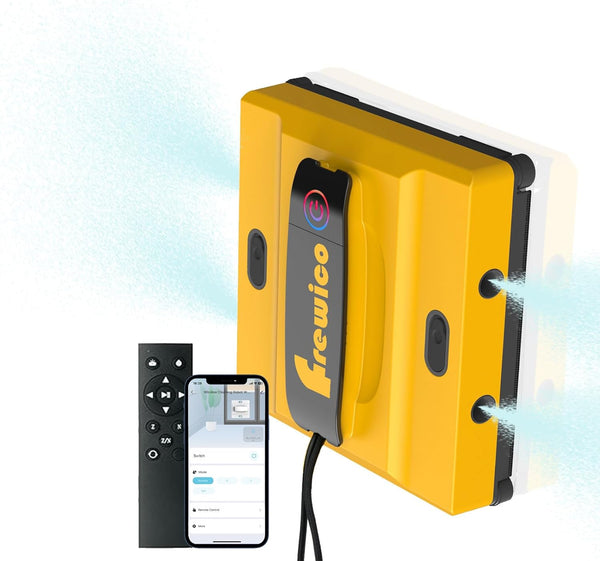
Frewico W5600X is used here as a practical example for understanding suction measurement types.
Introduction
Suction power is one of the first numbers shoppers notice when comparing window cleaning robots. A larger Pa value can look impressive in a product title, marketplace image, or short social video. But Pa numbers only help when the measurement type is clearly explained.
For the Frewico W5600X, the correct distinction is important: the Frewico W5600X uses a high-speed vacuum fan rated at up to 8500Pa maximum fan suction, with approximately 5600Pa rated working suction during normal glass-cleaning operation. Those two values does not work as the same specification. One describes a fan-level maximum rating; the other describes the normal operating suction reference during glass cleaning.
This article explains what maximum fan suction means, why rated working suction matters, and how buyers should compare suction together with glass seal, cleaning pads, spray system, safety rope setup, UPS-style emergency backup protection, and path planning.
Why Pa Numbers Need Context
Pa, or pascal, is a pressure unit. In window cleaning robot listings, it is often used to describe the vacuum system that helps the robot attach to glass. The problem is that different brands and listings may use Pa numbers in different ways. Some may describe fan-level capability. Some may describe working conditions. Others may leave the measurement point and test condition unclear.
A buyer should ask one simple question: what kind of suction value is being described?
If a product only shows a large number without explaining the measurement type, it is difficult to compare fairly. The number may still be useful, but it should be read with caution. A window cleaning robot depends on more than a vacuum figure. Glass condition, pad thickness, air leakage, moisture, dust, power stability, and the robot's movement system all influence real use.
Maximum Fan Suction vs Rated Working Suction
The key difference is measurement purpose. Maximum fan suction describes the fan system's upper suction rating. Rated working suction describes the operating suction reference during normal cleaning.
| Suction Term | What It Means | How Buyers Should Use It |
|---|---|---|
| Maximum Fan Suction | A fan-level maximum suction rating under stated product conditions. | Useful for understanding vacuum system capability, but not a standalone safety promise. |
| Rated Working Suction | The suction reference during normal glass-cleaning operation. | More useful for everyday cleaning expectations and product comparison. |
| Adhesion in Real Use | The robot's ability to stay attached under actual surface and setup conditions. | Depends on seal, pads, glass condition, power, setup, and safety systems. |
| Safety System | Backup, safety rope, power connection, and supervision requirements. | Should be evaluated together with suction, not replaced by suction. |
For Frewico W5600X, parameter tables should separate the two values:
| W5600X Suction Parameter | Approved Wording |
|---|---|
| Maximum Fan Suction | Up to 8500Pa |
| Rated Working Suction | Approx. 5600Pa during normal operation |
This distinction helps shoppers avoid a common mistake: comparing only the largest Pa number.
Why Maximum Fan Suction Still Matters
Maximum fan suction can still matter because it describes the vacuum fan system behind the robot. A stronger fan system can help support adhesion, especially when paired with the right cleaning pads, surface fit, and movement control.
However, maximum fan suction is not the same as saying the robot continuously maintains that number on glass during every cleaning pass. Real conditions change. A dusty window, worn pad, uneven contact, edge transition, or small air leak can affect how the robot behaves. Reliable window cleaning robot content should avoid treating any Pa value as a complete performance or safety guarantee.
For W5600X, use the phrase "up to 8500Pa maximum fan suction" only when the sentence also makes clear that its rated working suction is approximately 5600Pa during normal glass-cleaning operation. In short content where there is no room to explain both values, it is safer to use the rated working suction wording.
What Suction Does Not Tell You
Suction is important, but it does not answer every buying question. It does not tell you whether the spray system is effective, whether the pads are easy to maintain, whether the product is suitable for frameless glass, or whether the safety rope setup is clearly explained.
When comparing a robot window cleaner, suction should be read with:
- Glass type and surface condition.
- Pad condition and replacement availability.
- Spray system and water tank details.
- Safety tether setup.
- UPS-style emergency backup role.
- Power connection requirements.
- Edge detection for frameless glass.
- Path planning and movement modes.
- App and remote control options.
The W5600X combines suction with dual ultrasonic water spray, a quad-nozzle / quad-stream spray system, 100 ml total dual water tanks, UPS-style emergency backup protection, an approximately 14.8 ft safety rope, edge-detection sensors, smart Z/N/hybrid path planning, app control, and remote control. Each feature works best when evaluated as part of the full cleaning system.
How Suction Affects Cleaning Performance
In a window cleaning robot, suction supports contact between the robot, pads, and glass. Good contact helps the pads wipe consistently. Poor contact can affect movement, edge behavior, and cleaning quality.
Still, suction alone does not remove every mark from glass. Fingerprints, light dust, and routine maintenance are different from construction dust, grease, hard-water marks, or long-neglected outdoor grime. A strong vacuum system helps the robot stay in contact with the surface, but cleaning results also depend on pad cleanliness, water use, repeated passes, and surface preparation.
That is why Frewico W5600X must not be described as a complete replacement for manual judgment. It is a smart cleaning tool for suitable windows and glass surfaces when users follow safety, surface, power, and maintenance guidance.
How to Compare Suction Claims on Amazon, TEMU, or TikTok
Marketplace and social content often makes suction claims easy to notice. The harder part is verifying what the number means.
Use this checklist before trusting a Pa claim:
- Does the listing say whether the number is maximum fan suction or rated working suction?
- Does the article, video, or image show the exact model name?
- Is the glass surface framed, frameless, flat, clean, dry, and suitable?
- Are the pads clean and properly attached?
- Is the robot connected to stable power?
- Is a safety rope shown or explained for elevated use?
- Does the manual describe surface limits and emergency backup behavior?
- Are other features, such as spray and path planning, explained?
If the claim is unclear, compare official product details before ordering.
If you prefer shopping on marketplaces, you can also look for Frewico W5600X on Amazon or TEMU and compare the official product details before ordering.
Where Frewico W5600X Fits
Frewico W5600X is a useful example because its suction wording can be explained transparently. It should not be reduced to one number. The practical statement is that Frewico W5600X uses up to 8500Pa maximum fan suction and approximately 5600Pa rated working suction during normal glass-cleaning operation.
That suction system is paired with a square design for improved 90-degree corner access, dual ultrasonic water spray, quad-nozzle / quad-stream water delivery, 100 ml total dual tanks, edge-detection sensors for frameless glass use cases, smart path planning, app control, remote control, UPS-style emergency backup protection, and an approximately 14.8 ft safety rope for elevated or hazardous use.
Learn more about the Frewico W5600X square window cleaning robot here: https://frewico.com/products/frewico-smart-window-cleaner-robot
FAQ
What does 8500Pa maximum fan suction mean?
That means the vacuum fan system is rated at up to 8500Pa at the maximum fan-suction level. It should not be confused with the rated working suction used during normal glass-cleaning operation.
What is the rated working suction of Frewico W5600X?
Frewico W5600X uses approximately 5600Pa rated working suction during normal glass-cleaning operation. This is the default consumer-facing suction value for everyday comparison.
Should I choose a window cleaning robot only by the highest Pa number?
No. Pa figures can be useful, but buyers should also compare glass fit, pad condition, spray system, power connection, safety rope setup, UPS role, path planning, and support details.
Does stronger suction make a robot window cleaner safer?
Suction is part of the attachment system, but it is not a complete safety system. Elevated or hazardous use still requires correct power setup, safety rope use, suitable surfaces, weather caution, and supervision.
Why does Frewico separate 8500Pa and 5600Pa?
Because they describe different measurement types. Up to 8500Pa refers to maximum fan suction, while approximately 5600Pa refers to rated working suction during normal cleaning operation.
Conclusion
Suction numbers are useful only when the measurement type is clear. For Frewico W5600X, up to 8500Pa maximum fan suction and approximately 5600Pa rated working suction are separate values. Treating them as interchangeable would be misleading.
The better buying approach is to evaluate suction alongside surface fit, pad condition, spray system, water capacity, path planning, power connection, UPS-style emergency backup protection, safety rope setup, and controls. That gives shoppers a more realistic view of what a window cleaning robot can do in everyday use.