Quad-Nozzle Spray vs Single Spray Window Cleaning Robots: What Buyers Should Know
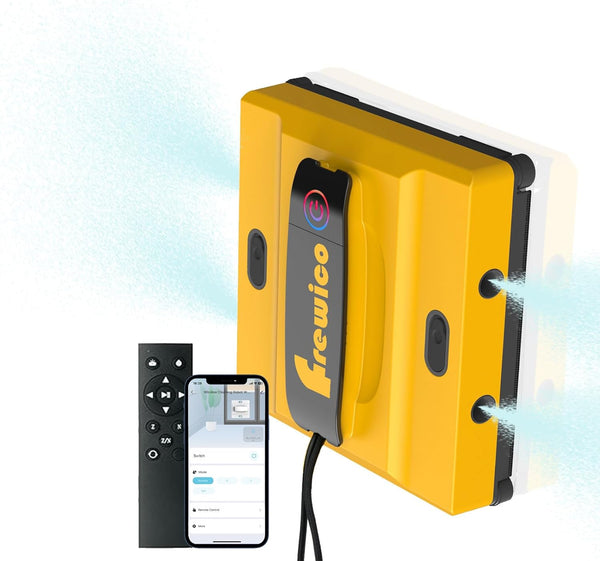
Frewico W5600X is used here as a practical example of a square window cleaning robot with dual ultrasonic spray and quad-nozzle spray.
Introduction
Spray design is one of the most useful details to check when comparing window cleaning robots. Many listings mention automatic spray, mist spray, ultrasonic spray, or water tanks, but the practical value depends on how the system is built and explained.
One common comparison is quad-nozzle spray versus single spray. A single spray robot may use one spray source to add moisture. A quad-nozzle robot uses four spray outlets, which can help distribute moisture through more points. But nozzle count alone does not decide cleaning quality.
The Frewico W5600X includes dual ultrasonic water spray, a quad-nozzle / quad-stream spray system, and 100 ml total dual water tanks. These are useful product facts for shoppers, but they should be explained carefully. Spray supports routine glass cleaning; it does not create certain stain removal, replace clean pads, or remove the need for correct setup.
This guide shows what quad-nozzle spray can affect, how it compares with single spray, and what buyers should check before choosing a robot window cleaner.
What Single Spray Usually Means
Single spray usually means a window cleaning robot has one main spray source. That does not automatically make it poor. A single spray system may still be useful if the spray direction, timing, water control, and pad design are practical.
The limitation is that a single outlet gives shoppers fewer hardware details to evaluate. If a listing only says "automatic spray" without explaining spray type, nozzle position, water capacity, or cleaning instructions, buyers may not know how the spray actually supports cleaning.
For small windows or light indoor dust, single spray may be enough for some users. For larger glass, glass doors, balcony panels, or frequent routine cleaning, shoppers often want more clarity about how moisture reaches the cleaning path.
What Quad-Nozzle Spray Can Add
Quad-nozzle spray gives the robot four spray outlets. In Frewico W5600X, this is described as a quad-nozzle / quad-stream spray system paired with dual ultrasonic water spray.
The practical value is not that four nozzles make every window spotless. The value is that nozzle layout is clearer and gives buyers a more specific spray hardware detail. More spray points may help the robot deliver moisture from multiple positions as it moves, depending on water level, nozzle condition, movement pattern, and pad contact.
This is why quad-nozzle spray should be discussed with realistic language. It can support better moisture delivery for routine glass care, but cleaning results still depend on dirt level, pad condition, glass surface, and user setup.
Visual Comparison
Quad-nozzle spray gives buyers a clearer hardware detail, but pads, water control, and setup still affect real cleaning results.
| Spray comparison point | Single spray | Quad-nozzle spray |
|---|---|---|
| Spray source | One main outlet | Four spray outlets |
| Buyer clarity | Depends on listing detail | Easier to understand nozzle layout |
| Water planning | Requires tank and instruction details | Still requires tank and instruction details |
| Cleaning result | Depends on pads, dirt, and setup | Also depends on pads, dirt, and setup |
| Best way to compare | Ask how spray works | Ask how spray, pads, and movement work together |
The main takeaway is that quad-nozzle spray is a useful feature, but it should be part of a full-system comparison rather than a standalone promise.
Why Ultrasonic Spray Matters Too
Nozzle count is only one part of the spray system. Spray type also matters. Ultrasonic spray is designed to create a fine mist rather than simply dripping water onto the glass.
Frewico W5600X uses dual ultrasonic water spray. That means the spray feature is more than about four outlets; it is also about how moisture is delivered. Fine mist can help the pads wipe with controlled moisture instead of working on dry glass.
However, ultrasonic spray does not work as magic. Very dirty exterior glass, sticky residue, oily marks, construction dust, or dried buildup may still need preparation. Spray is most useful for routine household glass care when the robot is used on suitable surfaces with clean pads.
Water Tank Capacity Still Matters
A spray system needs water, so tank capacity is part of the comparison. Frewico W5600X has 100 ml total dual water tanks, described as 50 ml x 2 in product evidence.
This is a useful specification because it helps buyers understand the water system. But it should not be turned into a fixed claim about cleaning a specific number of windows per fill. Window size, dirt level, spray frequency, and user settings can all affect water use.
For large windows and glass doors, a stated water capacity gives shoppers one more concrete detail to compare. A listing that names spray type, nozzle layout, and water capacity is easier to evaluate than one that only says "sprays automatically."
Pads Are Still the Cleaning Contact
Spray prepares the surface, but pads do the wiping. If the cleaning pads are dirty, too wet, too dry, worn, or attached incorrectly, the final result can suffer even if the robot has a strong spray system.
This is one reason marketplace reviews can be hard to interpret. A user may report streaks, but the review may not mention pad condition, glass condition, water use, or whether the robot was used on suitable glass. Without that context, it is hard to know whether the issue was the spray system, the pads, the surface, or setup.
When comparing robots, look for pad availability, pad care instructions, and whether the product explains how spray needs to be used with the pads.
Suction, Spray, and Path Planning Work Together
Spray does not replace suction. Suction helps the robot stay in contact with vertical glass, while spray helps manage moisture for wiping.
The Frewico W5600X uses a high-speed vacuum fan rated at up to 8500Pa maximum fan suction, with approximately 5600Pa rated working suction during normal glass-cleaning operation. These values should be separated from spray claims. They describe the suction system, not water delivery.
Path planning also matters. Frewico W5600X supports smart path planning with Z-shape, N-shape, and Z/N hybrid modes. Organized movement can help the spray and pads work across the glass more predictably than a random pattern, while still requiring realistic expectations about surface condition and window geometry.
Practical Buyer Checklist
Use this checklist when comparing quad-nozzle and single spray window cleaning robots.
| Buyer question | What to check |
|---|---|
| Is the spray type named? | Look for ultrasonic spray, mist spray, or a clear water-delivery description |
| Is nozzle count stated? | Quad-nozzle is clearer than vague automatic spray wording |
| Is water capacity listed? | Tank capacity helps with cleaning-session planning |
| Are pad instructions clear? | Spray works best with clean, correctly attached pads |
| Is suction defined separately? | Do not confuse spray features with suction values |
| Are limits explained? | Heavy dirt, unsuitable glass, or bad setup can affect results |
If you prefer shopping on marketplaces, you can also look for Frewico W5600X on Amazon or TEMU and compare the official product details before ordering.
Where Frewico W5600X Fits
Frewico W5600X is a square window cleaning robot with dual ultrasonic spray, a quad-nozzle / quad-stream spray system, and 100 ml total dual water tanks. It also includes approximately 5600Pa rated working suction during normal glass-cleaning operation, up to 8500Pa maximum fan suction, smart Z/N/hybrid path planning, app control, remote control, UPS emergency protection, edge detection for frameless glass, and an approximately 14.8 ft safety rope.
That feature mix makes W5600X relevant for shoppers comparing window cleaning robots for suitable large windows, high-rise apartment windows, frameless glass, glass doors, shower doors, mirrors, and balcony glass when safety, power, weather, supervision, and surface restrictions are followed.
Learn more about the Frewico W5600X square window cleaning robot here: https://frewico.com/products/frewico-smart-window-cleaner-robot
FAQ
Is quad-nozzle spray better than single spray?
Quad-nozzle spray gives a robot more spray outlets and a clearer hardware layout. It can support moisture delivery, but real cleaning results still depend on pads, dirt level, glass condition, path planning, and setup.
What spray system does Frewico W5600X use?
Frewico W5600X uses dual ultrasonic water spray with a quad-nozzle / quad-stream spray system and 100 ml total dual water tanks.
Does more spray mean cleaner glass?
Not always. More spray points can be useful, but too much water, dirty pads, unsuitable glass, or heavy buildup can still affect results. Spray should be compared with pad care and cleaning instructions.
Should I compare spray and suction separately?
Yes. Spray manages moisture for wiping. Suction helps the robot maintain contact with glass. For W5600X, up to 8500Pa is maximum fan suction, while approximately 5600Pa is rated working suction during normal operation.
What should Amazon or TEMU shoppers check before ordering?
Check spray type, nozzle count, water capacity, pad instructions, suction definitions, safety setup, path planning, and whether the product details match the exact model being ordered.
Conclusion
Quad-nozzle spray is a useful feature because it gives buyers a clearer view of how a window cleaning robot delivers moisture. Compared with vague single spray claims, it can make the spray system easier to understand and compare.
Still, nozzle count is not the whole cleaning system. Frewico W5600X is best evaluated by looking at dual ultrasonic spray, quad-nozzle spray, 100 ml total dual water tanks, clean pads, defined suction, smart path planning, controls, and safety setup together. That gives buyers a more practical way to compare window cleaning robots before ordering.