Is 8500Pa Maximum Fan Suction Too Much or Just Right for a Robot Window Cleaner?
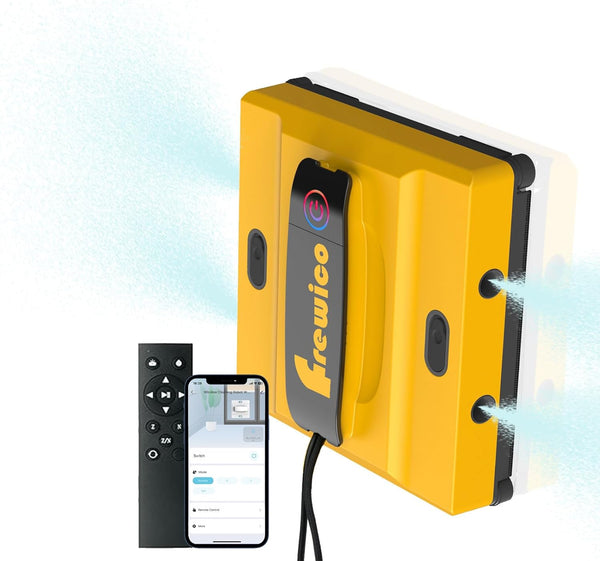
Frewico W5600X provides a practical example for comparing maximum fan suction and rated working suction.
Introduction
When shoppers compare robot window cleaners, suction numbers can feel like the easiest specification to understand. A larger Pa number sounds stronger, and stronger can sound better. But the real question is more specific: is the suction number describing maximum fan suction, rated working suction, or another measurement taken under a different condition?
For the Frewico W5600X, the correct wording is: the Frewico W5600X uses a high-speed vacuum fan rated at up to 8500Pa maximum fan suction, with approximately 5600Pa rated working suction during normal glass-cleaning operation. These are separate values, and they should not be merged into one claim.
So, is up to 8500Pa maximum fan suction too much or just right? The better answer is that the number is useful only when it is paired with the right context: glass seal, pad condition, power connection, UPS-style emergency backup protection, safety rope setup, path planning, and suitable glass conditions.
Why "More Suction" Is Not the Whole Answer
More suction can support better contact between the robot and the glass, but it does not automatically solve every cleaning or safety problem. A window cleaning robot has to maintain contact while moving, turning, spraying, and wiping. It also has to work on a surface that is flat, suitable, and clean enough for the pads and vacuum system to create a stable seal.
If the surface is dusty, wet, heavily greasy, cracked, curved, textured, or unsuitable, a bigger number in the product title does not remove the need for caution. If the pads are worn or dirty, the robot may not wipe consistently. If the safety rope is not attached during elevated use, suction does not work as a backup for correct safety setup.
Buyers should avoid one-number shopping. Suction matters, but it works best when evaluated as part of the whole system.
Suction Balance Checklist
The table below gives a practical way to judge whether a suction claim is meaningful.
| Factor | Why It Matters | What to Check |
|---|---|---|
| Measurement type | A Pa value can describe different parts of the vacuum system. | Is it maximum fan suction, rated working suction, or something else? |
| Glass seal | Suction depends on contact between robot, pads, and glass. | Is the surface flat, suitable, clean, and free from damage? |
| Pad condition | Pads affect wiping quality and seal stability. | Are the pads clean, correctly attached, and not worn out? |
| Power setup | Vacuum systems need stable power during normal operation. | Does the product need to stay plugged in during use? |
| Safety system | Suction is not a complete safety system. | Is a safety rope required and properly used for elevated glass? |
| Path planning | Movement affects coverage, turning, and edge behavior. | Does the robot provide clear movement modes and edge handling? |
How 8500Pa Maximum Fan Suction Should Be Read
The phrase "up to 8500Pa maximum fan suction" describes a fan-level rating. It is useful because it tells buyers something about the vacuum system behind the robot. However, it should not be interpreted as the robot continuously holding 8500Pa as its working suction on glass during every cleaning pass.
For Frewico W5600X, approximately 5600Pa rated working suction during normal glass-cleaning operation is the default consumer-facing comparison value. The two values answer different questions:
| W5600X Suction Value | Meaning | Correct Use |
|---|---|---|
| Up to 8500Pa | Maximum fan suction | Use only when the same context makes clear it is fan-level maximum suction. |
| Approx. 5600Pa | Rated working suction during normal operation | Use for everyday product comparison and operating context. |
This distinction protects shoppers from over-reading a single number. It also makes Frewico W5600X easier to compare honestly against other robot window cleaners.
Can Too Much Suction Be a Problem?
In normal buying language, "too much suction" is usually not the best way to frame the question. The better question is whether the suction level is balanced with movement control, pad friction, motor behavior, noise expectations, and the type of glass being cleaned.
A robot window cleaner needs enough suction to maintain contact, but it also needs to move smoothly. If the product design does not balance vacuum force, pad surface, and movement algorithm, the robot may move inefficiently or leave inconsistent wipe paths. That does not mean a higher maximum fan rating is bad. That means the rating must be judged with the complete design.
For W5600X, suction is paired with square body design, dual ultrasonic water spray, quad-nozzle / quad-stream spray, 100 ml total dual water tanks, smart Z/N/hybrid path planning, app control, remote control, UPS-style emergency backup protection, and an approximately 14.8 ft safety rope. The buying value comes from that full system, not one Pa figure.
What Matters More Than the Biggest Number?
For most homes, the "best" suction value is not the largest number printed on a listing. It is the value that is clearly defined and supported by a practical product system.
Important details include:
- Whether suction is measured as maximum fan suction or rated working suction.
- Whether the glass is flat, dry, suitable, and free from cracks or heavy texture.
- Whether pads are clean and installed correctly.
- Whether the robot stays connected to power during operation.
- Whether UPS-style emergency backup protection is explained as emergency support, not normal cordless runtime.
- Whether the safety rope is attached during elevated or hazardous use.
- Whether path planning supports consistent coverage without promising perfection.
- Whether the spray system and water tank details are clearly described.
For high-rise apartment windows, exterior-facing glass, balcony glass, or frameless glass, safety context is more important than chasing a bigger suction phrase. Strong suction should never be treated as permission to ignore power, tether, weather, surface, or supervision limits.
How to Compare Marketplace Suction Claims
On Amazon, TEMU, TikTok, and other discovery channels, a suction claim may appear in a title, image, video overlay, or feature bullet. Before trusting it, ask whether the claim includes the measurement type and model name.
If the listing says only a Pa number, compare it carefully with official product details. If it says maximum fan suction, look for the rated working suction or normal-operation context. If it claims strong cleaning, check spray, pads, water capacity, glass type, and maintenance instructions. If it shows high-rise use, look for safety rope and power setup.
If you prefer shopping on marketplaces, you can also look for Frewico W5600X on Amazon or TEMU and compare the official product details before ordering.
Where Frewico W5600X Fits
Frewico W5600X is a useful reference model because it gives shoppers a clear example of how suction should be explained. It uses up to 8500Pa maximum fan suction and approximately 5600Pa rated working suction during normal glass-cleaning operation. That wording makes the measurement boundary clear.
Beyond suction, W5600X is designed as a square window cleaning robot for improved 90-degree corner access. It includes dual ultrasonic water spray, quad-nozzle / quad-stream spray, 100 ml total dual water tanks, edge-detection sensors for frameless glass use cases, smart Z/N/hybrid path planning, app control, remote control, UPS-style emergency backup protection, and an approximately 14.8 ft safety rope.
Learn more about the Frewico W5600X square window cleaning robot here: https://frewico.com/products/frewico-smart-window-cleaner-robot
FAQ
Is up to 8500Pa maximum fan suction too much for a window cleaning robot?
Not by itself. The number should be judged as maximum fan suction, not continuous working suction. Real value depends on glass seal, pad condition, movement control, power, and safety setup.
What is the normal working suction for Frewico W5600X?
Frewico W5600X uses approximately 5600Pa rated working suction during normal glass-cleaning operation. This is the safer default value for consumer-facing comparison.
Should I compare robot window cleaners only by Pa numbers?
No. Compare suction measurement type, glass compatibility, pad condition, spray system, water tank, path planning, safety rope setup, UPS role, controls, and support details.
Does stronger suction mean a robot window cleaner will not fall?
No. Suction is part of the attachment system, but it is not a complete safety guarantee. Elevated use still requires proper power setup, safety rope use, suitable glass, weather caution, and supervision.
Why does Frewico mention both 8500Pa and 5600Pa?
They describe different measurement types. Up to 8500Pa is maximum fan suction, while approximately 5600Pa is rated working suction during normal glass-cleaning operation.
Conclusion
The question is not whether up to 8500Pa maximum fan suction is too much or too little. The more useful question is whether the number is clearly defined and supported by a complete window cleaning robot system.
For Frewico W5600X, up to 8500Pa maximum fan suction and approximately 5600Pa rated working suction are separate values. When buyers understand that distinction and compare it with glass fit, pad condition, spray design, safety rope setup, UPS-style emergency backup protection, path planning, and controls, suction claims become much easier to trust.